What Happens Behind the Scenes When You Send Airtime Internationally
Sending airtime internationally may seem simple, but behind each successful top-up is a complex process involving payments, currency conversion, telecom routing, and real-time validation. This article explains how it all works behind the scenes.

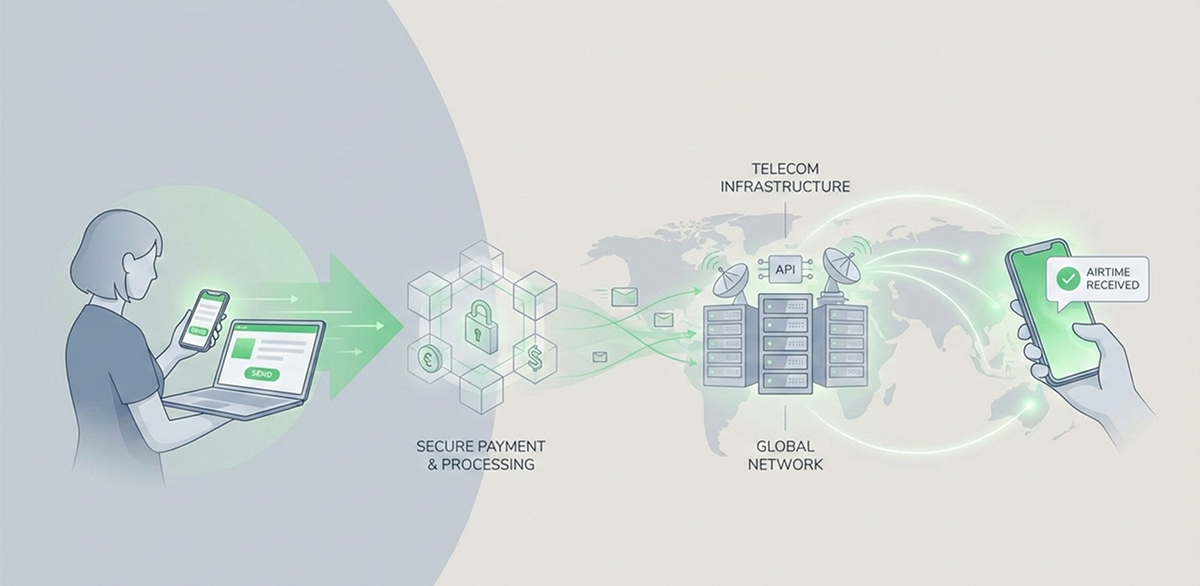
Sending airtime internationally looks simple on the surface. You enter a phone number, choose an amount, pay, and—within seconds—your loved one receives credit on their phone.
👉 (Internal link: How to Send Airtime and Digital Gifts to Ethiopia from Abroad)
But behind that single tap is a surprisingly complex, global process involving payments, currencies, telecom operators, fraud controls, and real‑time systems working together.
This post breaks down what actually happens behind the scenes when you send airtime internationally—and why modern platforms are able to deliver it almost instantly.
1. It Starts With Payment Authorization
The moment you confirm a transaction, the platform first verifies your payment. This step is critical because airtime is a non‑reversible digital product—once delivered, it can’t be taken back.
Behind the scenes, the system checks:
- Whether the payment was successfully authorized
- Fraud and risk signals (velocity, device, behavior patterns)
- Whether the transaction meets compliance and security rules
Only after the payment is confirmed does the system proceed. If anything looks suspicious, the transaction is paused or rejected before airtime is ever sent.
2. Currency Conversion Happens in Real Time
Most international airtime platforms operate across multiple currencies. For example, a sender might pay in USD, EUR, or GBP, while the airtime itself is delivered in a local currency.
Behind the scenes:
- The amount is converted using a predefined exchange rate
- Fees and commissions are calculated transparently
- The final deliverable value is determined
This step ensures the sender knows exactly how much airtime will be received, not just how much they paid.
3. The Phone Number Is Validated
Before airtime is sent, the system verifies the destination number:
- Is the number active?
- Which country and operator does it belong to?
- Does the operator support the selected airtime amount?
This prevents failed deliveries and ensures the airtime reaches the correct network. In many cases, this validation happens in milliseconds using telecom routing data.
4. Routing Through Telecom Partners
Here’s where things get interesting.
👉 (Internal link: What Makes TeleSend Different from Other Airtime & Gift Platforms)
International airtime platforms do not connect directly to every mobile operator in the world. Instead, they rely on a network of licensed telecom aggregators and partners who already have direct connections to operators.
Behind the scenes:
- The system selects the best available route
- The airtime request is sent via secure APIs
- The operator credits the recipient’s balance
Some routes are instant. Others may take a bit longer depending on the country, operator systems, or network conditions.
5. Airtime Is Delivered (or Retried)
Once the operator processes the request, one of two things happens:
✅ Successful Delivery
- Airtime is credited to the recipient’s phone
- A confirmation response is sent back
- The sender is notified instantly
⚠️ Temporary Failure
- Network congestion
- Operator downtime
- Inconsistent number status
In these cases, modern platforms automatically retry or reroute the transaction—often without the user ever noticing.
6. Confirmation, Receipts, and Records
After completion, the system:
- Generates a transaction receipt
- Stores logs for auditing and support
- Updates balances and reports in real time
This record‑keeping is essential for transparency, customer support, and regulatory compliance.
Why Airtime Can Be Instant—and Sometimes Isn’t
People often ask why airtime is delivered instantly most of the time, but occasionally takes longer.
👉 (Internal link: Common Mistakes When Sending Airtime Internationally)
The reason is simple: international airtime depends on multiple external systems.
Speed depends on:
- Operator infrastructure
- Country‑specific regulations
- Network stability
- Time of day and traffic volume
Good platforms are designed to handle these variations gracefully—by retrying, rerouting, or refunding when necessary.
Why This Complexity Matters
Understanding what happens behind the scenes explains why trust matters so much in international airtime services.
👉 (Internal link: How We Think About Security at TeleSend)
A reliable platform must:
- Handle payments securely
- Work with licensed telecom partners
- Manage currencies accurately
- Detect fraud before delivery
- Recover gracefully from failures
When done right, all of this complexity disappears—and the experience feels effortless.
Final Thought
Sending airtime internationally may feel like magic, but it’s really the result of carefully orchestrated systems working across borders in real time.
The next time you send airtime to someone you care about, you’ll know just how much is happening in the background to make that simple moment possible.